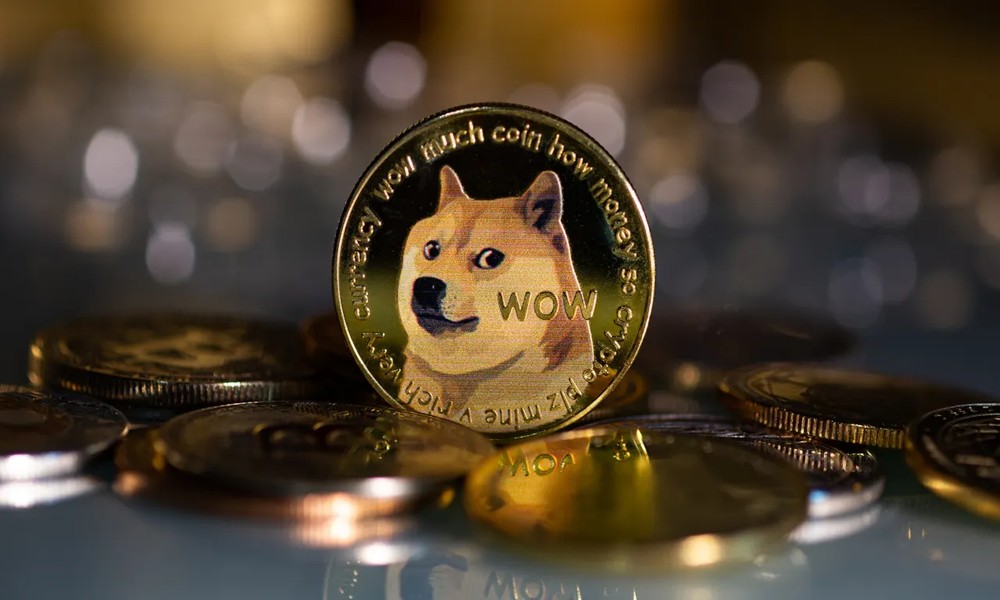
Dogecoin runs on a Proof-of-Work consensus mechanism using the Scrypt algorithm – the same hashing algorithm used by Litecoin, which makes merged mining between the two possible. Miners compete to solve cryptographic puzzles, validate transactions, and add new blocks to the Dogecoin blockchain. The network rewards the fastest miner with 10,000 DOGE per block, with a new block confirmed approximately every 1 minute.
For traders familiar with Bitcoin mining, Dogecoin operates similarly but with a much shorter block time and a fixed (non-halving) block reward – meaning there is no supply shock event comparable to Bitcoin halvings. This creates a more predictable mining income stream but also means the DOGE supply grows at a steady, ongoing rate.
Those new to crypto mining often ask exactly how to mine dogecoin – and the answer involves five key components: the right hardware, mining software, a pool connection, a wallet, and access to affordable electricity. Mastering each of these components determines whether mining becomes a profitable operation or an expensive hobby.
Three Approaches to Mining Dogecoin
Before choosing hardware or software, you need to decide which mining model fits your goals and budget.
|
Mining Method |
How It Works |
Best For |
|---|---|---|
|
Solo Mining |
Mine alone, keep 100% of rewards |
High-hashrate ASIC farms |
|
Pool Mining |
Combine hashpower with others, split rewards proportionally |
Most individual miners |
|
Cloud Mining |
Rent hashpower from a data center |
Beginners with no hardware |
Pool mining is the recommended approach for the vast majority of miners today, as it provides consistent, predictable income instead of the lottery-like payouts of solo mining. Cloud mining, while accessible, typically delivers lower net returns due to subscription fees and contract terms.
Choosing Your Hardware: ASIC vs GPU
The Scrypt algorithm that powers Dogecoin was originally designed to be GPU-friendly and ASIC-resistant – but that resistance has long since been overcome. Today, ASIC miners dominate Dogecoin mining due to their vastly superior hashrate and energy efficiency compared to GPUs.
Key hardware options in 2026:
|
Hardware |
Hashrate |
Power Consumption |
Best Use Case |
|---|---|---|---|
|
Bitmain Antminer L7 |
~9.5 GH/s |
~3,425W |
Institutional / farm-scale mining |
|
Goldshell Mini DOGE Pro |
~205 MH/s |
~220W |
Home / small-scale mining |
|
GPU (AMD/Nvidia) |
30-95 MH/s |
100-250W |
Budget entry, low commitment |
|
CPU |
<5 MH/s |
65-125W |
Not recommended for profit |
For serious miners targeting profitability, ASIC miners built for the Scrypt algorithm – particularly the Antminer L7 – are the clear choice. GPUs remain viable for budget-conscious beginners or those who want flexibility to switch algorithms, but their hashrate output is no longer competitive at scale.
Step-by-Step: How to Start Mining Dogecoin
Here is a practical, step-by-step breakdown of the full setup process:
Step 1: Set Up a Dogecoin Wallet
Before anything else, you need a wallet to receive your mining rewards. Options include:
- Desktop wallets – Dogecoin Core (official, full-node);
- Mobile wallets – Trust Wallet, Exodus;
- Hardware wallets – Ledger Nano X, Trezor Model T (best for long-term security);
- Exchange wallets – OKX, Binance (convenient but custodial).
Always back up your seed phrase and store your private key securely offline.
Step 2: Choose and Set Up Your Hardware
- Purchase your ASIC miner or GPU rig;
- Connect hardware to power supply and router via Ethernet cable (ASICs do not support Wi-Fi);
- Power on the device and locate its local IP address via your router’s admin panel;
- Log into the ASIC control panel using default credentials (found in the device manual).
Step 3: Install Mining Software
Software choice depends on your hardware:
|
Hardware Type |
Recommended Software |
|---|---|
|
ASIC Miner |
CGMiner, BFGMiner |
|
GPU (AMD/Nvidia) |
EasyMiner, MultiMiner |
Always download mining software from official sources to avoid malware. Configure the software with your mining pool’s server URL, port, and your wallet address.
Step 4: Join a Mining Pool
Register with a reputable Dogecoin mining pool. Top options include:
- Prohashing – flexible payout options, multi-algorithm support;
- Aikapool – DOGE-specific pool, beginner-friendly;
- LitecoinPool – supports merged mining of LTC + DOGE simultaneously;
- ViaBTC – large pool, clear dashboard, competitive fees.
Enter the pool’s server address and your worker credentials into your mining software configuration file.
Step 5: Start Mining and Monitor Performance
Launch your mining software and verify that your hardware is submitting valid shares to the pool. Monitor:
- hashrate stability,
- pool-reported earnings,
- hardware temperature and fan speed,
- power draw and efficiency metrics.
Most pools provide a real-time dashboard where you can track earnings, estimated payouts, and worker status.
Profitability: Is Mining Dogecoin Worth It in 2026?
Profitability depends on four main variables:
- Hashrate of your equipment;
- Electricity cost ($/kWh);
- Current DOGE price;
- Network difficulty (which fluctuates with total hashpower).
Use this simplified framework to estimate daily profit:
Daily profit = (Your hashrate / Network hashrate) × Daily block rewards × DOGE price − Electricity cost
Below is an approximate profitability snapshot for common hardware types (estimates based on current network conditions):
|
Hardware |
Daily DOGE (approx.) |
Daily Power Cost ($0.07/kWh) |
Approx. Breakeven |
|---|---|---|---|
|
Antminer L7 |
800-1,200 DOGE |
~$5.75 |
12-18 months |
|
Goldshell Mini DOGE Pro |
15-25 DOGE |
~$0.37 |
18-24 months |
|
Mid-range GPU |
2-8 DOGE |
~$0.40 |
Very long / unprofitable |
Always run your numbers through a live mining calculator before purchasing hardware, as DOGE price and network difficulty can shift profitability dramatically within weeks.
Merged Mining: Mine DOGE and LTC Simultaneously
One of Dogecoin’s most powerful features for miners is merged mining – the ability to mine Dogecoin and Litecoin simultaneously without any additional hardware or energy cost. This is possible because both networks use the Scrypt algorithm, and the Dogecoin protocol was updated in 2014 to support AuxPoW (Auxiliary Proof of Work).
Benefits of merged mining:
- Earn both DOGE and LTC block rewards from the same hashpower;
- No additional electricity cost;
- Increases income stability and diversification;
- Supported by major pools like LitecoinPool and Prohashing.
For traders and miners who value capital efficiency, merged mining is one of the strongest arguments for choosing Dogecoin mining over other Proof-of-Work alternatives.
Key Risks and Considerations
Mining is a capital-intensive business with real operational risks. Before investing, consider the following:
- Hardware obsolescence – newer ASIC generations can quickly outpace older models, reducing your share of network hashpower;
- DOGE price volatility – a 40-50% drop in DOGE price can turn a profitable operation unprofitable overnight;
- Electricity costs – even small changes in your electricity rate significantly impact margins; regions with industrial tariffs or renewable energy have a structural advantage;
- Network difficulty growth – as more miners join the network, difficulty increases and individual rewards decrease;
- Regulatory risk – some jurisdictions impose restrictions on crypto mining, affecting operations and profitability.
Risk management strategies for miners:
- Hedge mined DOGE into stablecoins periodically to lock in profits;
- Operate in regions with low-cost and stable electricity;
- Plan hardware replacement cycles in advance;
- Use cloud mining or pool contracts to test profitability before committing to hardware.
Dogecoin Mining vs. Other Proof-of-Work Coins
For traders evaluating where to allocate mining capital, here is how Dogecoin compares to other popular PoW options:
|
Metric |
Dogecoin (DOGE) |
Litecoin (LTC) |
Bitcoin (BTC) |
Kaspa (KAS) |
|---|---|---|---|---|
|
Algorithm |
Scrypt |
Scrypt |
SHA-256 |
kHeavyHash |
|
Block Reward |
10,000 DOGE |
6.25 LTC |
3.125 BTC |
Variable |
|
Block Time |
~1 min |
~2.5 min |
~10 min |
~1 sec |
|
Merged Mining |
Yes (with LTC) |
Yes (with DOGE) |
No |
No |
|
ASIC Availability |
High |
High |
Very High |
Growing |
Dogecoin’s combination of high block frequency, merged mining capability, and strong community demand makes it a compelling choice for Scrypt ASIC miners seeking consistent daily income alongside Litecoin rewards.
Wallets and Security Best Practices
Once you start earning DOGE, securing your mining rewards becomes a priority. Best practices include:
- Use a non-custodial wallet for long-term holdings – hardware wallets like Ledger or Trezor offer the highest level of security;
- Never leave large amounts on an exchange wallet – exchange hacks remain a real risk in the crypto space;
- Enable two-factor authentication on all mining pool and exchange accounts;
- Back up your seed phrase in multiple secure offline locations;
- Use unique, strong passwords for pool accounts and wallets.
For active traders who plan to sell mined DOGE regularly, maintaining a separate trading wallet from your long-term cold storage wallet reduces exposure in the event of a security incident.
Final Thoughts: Is Dogecoin Mining Right for You?
Dogecoin mining in 2026 remains a viable income stream for miners with access to efficient hardware and affordable electricity. The combination of merged mining with Litecoin, a consistent 10,000 DOGE block reward, and strong retail demand for DOGE makes it one of the more resilient Scrypt mining opportunities available today.
For traders on platforms like TradersDreams, mining can serve as a complementary strategy to active trading – generating a baseline stream of DOGE that can be held, traded, or hedged depending on market conditions. The key is entering with realistic profitability expectations, sound risk management, and a clear plan for hardware lifecycle and energy costs.