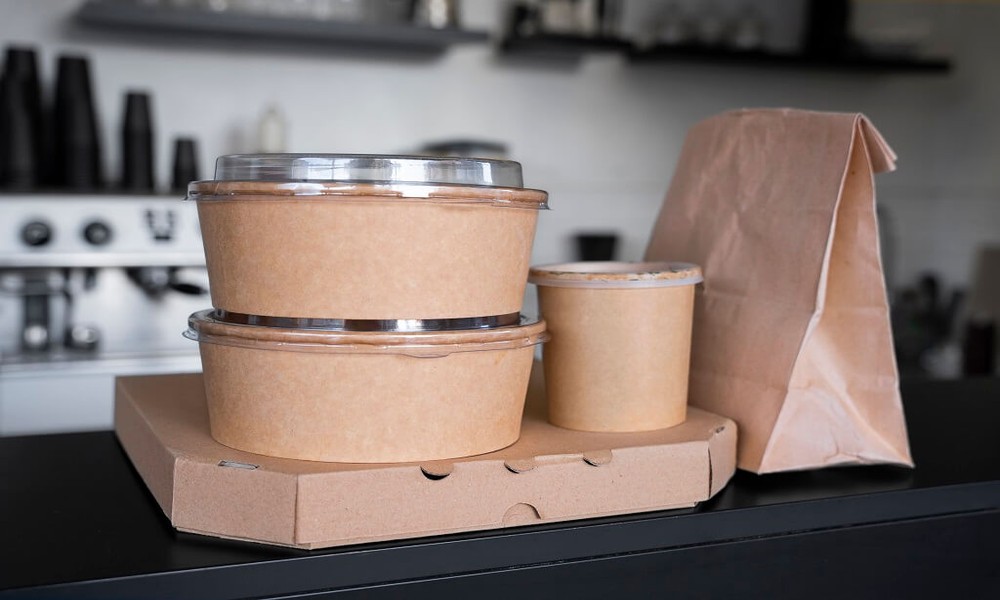
Food packaging Singapore operations require containers that meet the standard where it matters most: keeping food safe, extending shelf life, and presenting the product in a way that reflects the quality of what is inside.
Singapore’s Food Service Landscape and Packaging Demand
Singapore’s food industry is substantial and diverse. It spans hawker centres, casual dining restaurants, fast food chains, hotel banqueting kitchens, food manufacturing plants, supermarket prepared food sections, and a rapidly growing food delivery sector. Each of these segments has distinct packaging requirements, but all share the same non-negotiable baseline: food contact materials must be safe, and the containers must protect the food adequately during the time between preparation and consumption.
The rise of delivery platforms has significantly increased the volume of single-use food packaging moving through Singapore’s supply chain. Meals that would previously have been plated at the table now travel in sealed containers through a delivery process that tests packaging performance in ways a static restaurant setting never did. Temperature maintenance, leak prevention, structural integrity under stacking, and presentation upon opening are all critical in this context.
Material Selection for Food Safety
Not all plastic containers are equivalent in food safety terms. Materials used in food packaging Singapore applications must comply with the Singapore Food Agency’s requirements for food contact materials, which align broadly with international standards governing the chemicals permitted to migrate from packaging into food content.
Key material categories and their applications:
- Polypropylene (PP): heat-resistant, suitable for hot food, microwave-safe variants available, widely used for meal trays and containers
- Polyethylene terephthalate (PET): clear, rigid, suitable for cold beverages, salads, and chilled desserts
- Expanded polystyrene (EPS): good thermal insulation for hot food delivery, but increasingly restricted due to environmental regulations
- Bagasse and plant-based alternatives: growing in adoption for operators seeking eco-credentials without compromising function
Matching Packaging to Service Model
The packaging format should be chosen based on how the food will be handled, transported, and consumed:
- Dine-in: packaging needs are minimal; focus on portion trays, serving vessels, and waste containment
- Takeaway: containers need secure lids, leak resistance, and the structural integrity to survive being carried in a bag
- Delivery: packaging must maintain temperature longer, resist moisture condensation, and arrive undamaged after a journey in a delivery bag or box
- Catering and buffet: larger format trays with strong handles and sealed lids allow safe transport of bulk quantities
High-quality food packaging matched to the service model reduces complaints, reduces waste, and reduces the cost of dealing with problems that a predictable specification could have prevented.
Presentation as a Commercial Asset
A container communicates before the food is tasted. A clean, well-constructed, visually consistent container implies professionalism, hygiene, and attention to detail. A flimsy, inconsistent, or visually unappealing container implies the opposite.
“First impressions are lasting impressions.” – Lee Kuan Yew
This holds precisely in food service. The packaging a customer receives tells them something about the business that packed it, and that impression forms before the first bite.
Branding on packaging – printed logos, consistent colour schemes, or embossed brand marks – reinforces recognition and builds visual identity that translates into repeat purchases and referrals in competitive food service markets.
Sourcing Reliably in a High-Volume Environment
Running out of packaging during a peak service period or a catering event creates a cascade of operational problems. Reliable supply is a procurement priority, not an afterthought. When evaluating a food packaging Singapore supplier, consider:
- Stock depth: Does the supplier hold adequate inventory to fulfil orders promptly?
- Minimum order quantities: are they compatible with the volume your operation requires?
- Lead time consistency: how reliably do orders arrive within the quoted timeframe?
- Quality consistency: Are dimensions, material properties, and printing consistent across production batches?
- Customer service: how quickly do they respond to queries, quality claims, or urgent requirements?
Sustainability in Singapore’s Packaging Market
The Singapore government has introduced packaging sustainability frameworks through the Resource Sustainability Act, which requires large businesses to report on packaging data and work toward reduction targets. Smaller food businesses are increasingly feeling this pressure through their own customer expectations and corporate procurement requirements.
Suppliers who offer recyclable, reduced-weight, or recycled-content food packaging provide buyers with a pathway to meet these commitments without sacrificing functional performance.
Choosing the right food packaging Singapore solution is a decision that affects daily operations, food safety compliance, customer experience, and increasingly, sustainability reporting – making it one of the more consequential procurement choices a food business makes.