

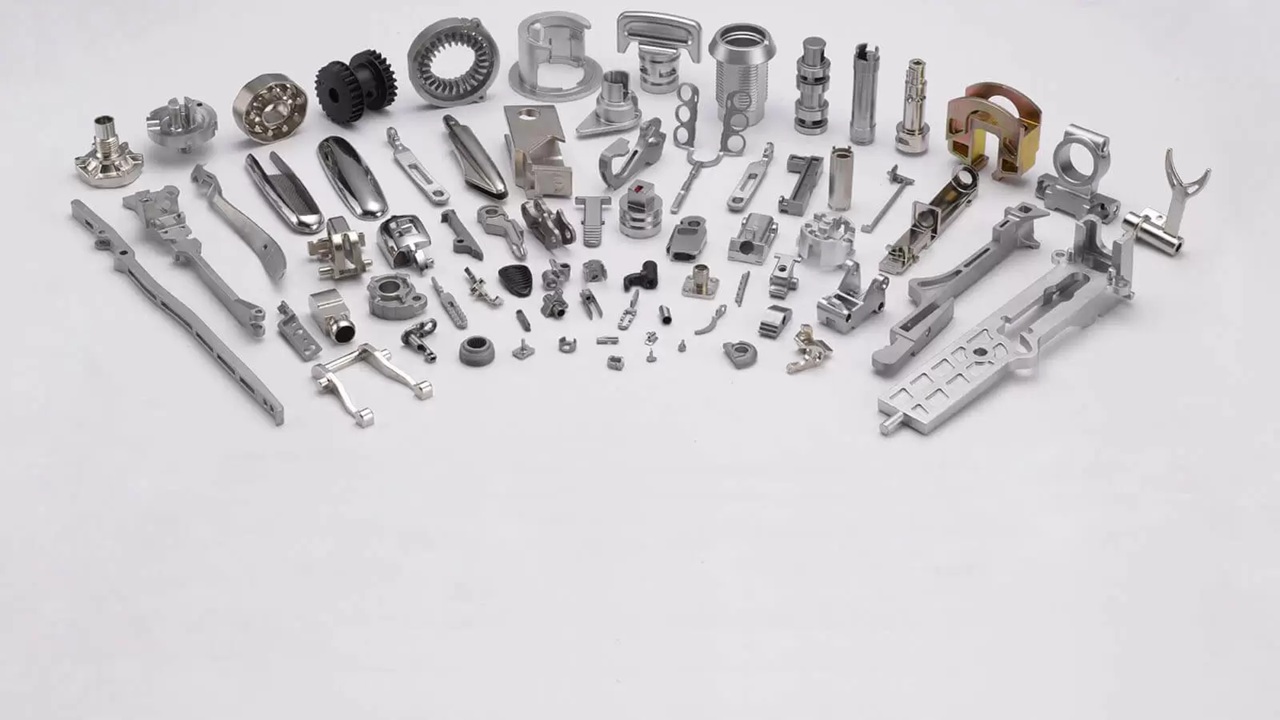
MIM manufacturing emerged from the marriage of two established industrial processes in the 1960s, though it required three decades to achieve recognition as a transformative manufacturing methodology. The technique, properly termed Metal Injection Moulding, represents a sophisticated fusion of powder metallurgy and plastic injection moulding principles, creating possibilities that neither predecessor could achieve alone. Today, this process produces billions of precision metal components annually, serving industries from medical devices to aerospace applications with a reliability that would have astonished its early developers.
Historical Development and Technical Foundation
The evolution of MIM manufacturing reflects how industrial innovation arises from combining existing methods. Plastic injection moulding existed since the 1870s, whilst powder metallurgy techniques dated back even further. The critical insight of mixing fine metal powders with thermoplastic binders created unprecedented manufacturing possibilities.
The process begins with materials preparation. Metal powders, measured in microns, undergo mixing with polymer binder systems to create feedstock. This mixture enters injection moulding equipment, filling precisely machined cavities under controlled conditions. The resulting green part undergoes debinding to remove binder material, leaving a brown part of approximately sixty per cent density. Finally, sintering at high temperatures fuses particles into solid components with mechanical properties rivalling conventionally manufactured parts.
The Singapore Manufacturing Advantage
Singapore’s position in Asia-Pacific MIM manufacturing demonstrates how technical education and strategic positioning create manufacturing excellence. The Asia-Pacific region dominates global MIM production, accounting for over forty per cent of market share in 2023, with Singapore contributing substantially through sophisticated infrastructure.
Singapore facilities maintain rigorous ISO 9001 and ISO 13485 certifications, essential for medical device manufacturing. The nation’s precision engineering capabilities and intellectual property protections attract international manufacturers seeking secure partnerships. The Asia-Pacific MIM market, projected to expand at 9.26 per cent compound annual growth rate through 2030, reflects increasing demand across electronics, automotive, and medical sectors.
Technical Capabilities and Material Versatility
MIM manufacturing’s appeal derives from several distinct technical advantages that address persistent manufacturing challenges:
• Geometric complexity without compromising cost
Components featuring internal channels, undercuts, multiple bore orientations, and intricate external details emerge from moulds requiring minimal secondary operations. Traditional machining would demand multiple setups and specialised tooling for equivalent complexity.
• Material efficiency approaching ninety-five per cent
Conventional subtractive manufacturing generates substantial waste material. MIM manufacturing utilises nearly all input material, with unused feedstock often recyclable for future production runs.
• Dimensional consistency across production volumes
Once process parameters achieve validation, components exhibit remarkable uniformity. Medical device manufacturers particularly value this repeatability, where patient safety depends upon consistent performance.
• Expanding material portfolio
Ferrous alloys dominated fifty-two per cent of the global MIM market in 2024, led by stainless steels prized for corrosion resistance and mechanical properties. However, special materials including titanium alloys, nickel-based superalloys, and tungsten heavy alloys demonstrate the fastest growth, expanding at 10.8 per cent annually through 2032.
• Economic viability at volume
Initial tooling investments require substantial capital, yet per-unit costs decline dramatically with production volume. This economic structure favours manufacturers producing thousands or millions of identical components.
Industry Applications and Market Dynamics
The automotive sector commanded thirty-five per cent of global MIM market revenue in 2024, employing the technology for sensors, transmission components, and structural parts. As electric vehicle production accelerates, particularly in China’s market projecting twenty-five million units by 2025, demand for MIM components continues expanding.
Electronics manufacturing presents the fastest-growing segment, projected to increase at 12.5 per cent annually from 2025 through 2032. Smartphone housings, connector components, and laptop structural elements increasingly employ MIM technology, particularly in Asia-Pacific manufacturing centres.
Medical applications demonstrate MIM manufacturing’s precision capabilities. Surgical instruments, orthopaedic implants, and endoscopic components require biocompatible materials and dimensional accuracy that MIM processes deliver. The global medical MIM market, valued at USD 578.03 million in 2024, projects growth to USD 1,105.69 million by 2032.
Design Considerations for Optimal Results
Successful MIM manufacturing begins at design. Engineers must understand process capabilities and limitations. Wall thickness uniformity facilitates consistent sintering, preventing differential shrinkage. Component size constraints favour parts under approximately one hundred grammes, though within these parameters design freedom exceeds most alternative processes.
Material selection demands consideration of application requirements. High-strength automotive components specify tool steels. Magnetic sensors employ soft magnetic materials. Medical implants require cobalt-chromium alloys meeting biocompatibility standards. Each material necessitates specific sintering profiles developed through extensive testing.
Market Trajectory and Future Developments
The global MIM manufacturing market, valued between USD 4.65 and 5.23 billion in 2024, demonstrates consistent growth trajectories. Projections suggest market expansion to USD 8.99 to 11.08 billion by 2032-2034, representing compound annual growth rates between 7.21 and 8.6 per cent, driven by genuine manufacturing advantages rather than speculative enthusiasm.
Asia-Pacific’s manufacturing dominance continues strengthening, driven by electronics production and automotive expansion. Singapore’s strategic position within this region, combining technical sophistication with regulatory stability, positions its manufacturers favourably for sustained growth. Recent developments include updated material specifications for titanium alloys expanding MIM capabilities into aerospace applications, alongside process automation improvements enabling tighter tolerances.
Conclusion
The trajectory from experimental technique in the 1960s to multi-billion-dollar global industry illustrates how patient development of manufacturing capabilities creates lasting value. MIM manufacturing serves diverse industries not through marketing innovation but through delivering tangible advantages: geometric complexity, material efficiency, dimensional consistency, and economic viability at production volumes. Singapore’s manufacturers, operating within Asia-Pacific’s dominant manufacturing region, contribute essential capabilities to this expanding industry, maintaining quality standards whilst serving global markets. As component complexity increases and miniaturisation demands intensify across industries, manufacturers worldwide recognise the indispensable role of precision metal component production through MIM manufacturing.
