Replacing a residential driveway is easily one of the most painful surprise home repairs out there. You’re looking at dropping anywhere between $5,000 and $12,000 approx to rip out and replace bad blacktop. Most homeowners think asphalt just naturally gives up the ghost after ten or twelve years.
It doesn’t. After inspecting thousands of driveways over the last decade, I can tell you pavement almost never dies of old age.It dies because no one has paid attention to it. Give your asphalt driveway some proactive maintenance and you could see it last from 12 years to 25 or even 30 years. And the look of your home does not plummet down the drain.
Quick Summary: How Maintenance Doubles Driveway Lifespan
These two elements assault the asphalt from within through water and ultraviolet light. Maintenance work ensures that these two elements do not assault the aggregates underneath. Ensure that the water does not reach the surface, protect the road from being disintegrated due to the freeze-thaw cycle, and the resilient asphalt binder will retain its shape for years to come https://www.americanpavingtn.com/knoxville/
The Science of Asphalt Decay: UV Rays and Water Intrusion
Fresh asphalt relies on a flexible petroleum binder to glue crushed stone together. But sun exposure starts ruining that binder immediately.
UV rays will be able to oxidize the petroleum in it and remove its elasticity and deep black color, giving it a pale gray hue. Once the binder hardens, standard SUV weight starts snapping the surface into hairline cracks.
Then water moves in.The rain seeps in from these tiny cracks and gathers underneath the sub-base of the driveway. During winter, the water turns to ice and expands, breaking up the aggregate base and forming voids below the surface. The next time you drive an overloaded vehicle above the area, the pavement will break through and sink right into the voids.
Regular maintenance cuts off that chain reaction before your foundation falls apart.
The Core Maintenance Strategy: Crack Filling and Sealcoating
All there is to it: Fill any crack that appears and strictly adhere to the sealer application schedule.
If a crack opens wider than a quarter-inch, don’t ignore it. Cold liquid pourables from a big-box store are fine for thin hairline marks, but deep fissures need hot-rubberized crack filler. Due to the stretching and contracting action of rubber-based materials as the soil moves in spring and winter due to changing temperatures, the bond remains waterproof, preventing washing away of the base layer.
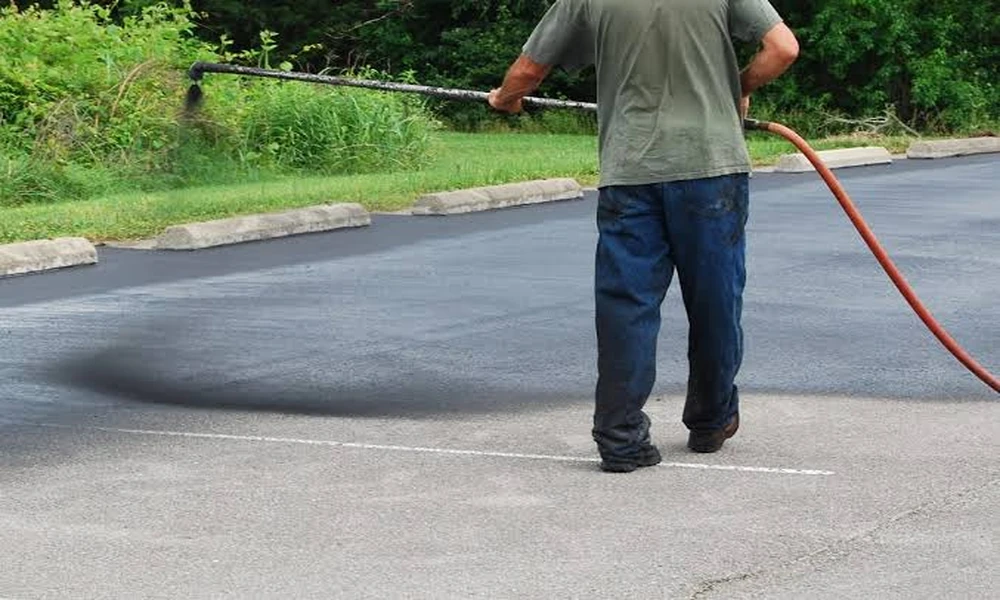
Combine these surface treatments with sealing to prevent fuel and oil spills, as well as damage from sunlight. Make sure the newly laid asphalt has time to cure for six to 12 months before applying the first coating; then seal it every three years.
Expert Rule of Thumb: The 3-Year Sealcoat Rule
Whatever you do, don’t sealcoat your driveway every single year. I see guys do this constantly thinking more protection is better. It is not. An excessive amount of sealer creates a tough outer layer on the blacktop surface which starts cracking.
Stick to the 3-Year Rule: apply a single, thin coat of high-solids polymer-modified emulsion every 36 months. That’s it.
Choosing the Right Materials: Asphalt Sealer Types
The product you slap on your pavement matters. You’ll run into three main options on the market:
- Refined Tar Sealers: They handle gas and oil spills like a champ, but fewer people use them now. Local bans and health concerns over high VOCs have pushed them out of favor.
- Asphalt Emulsion Sealers: The current standard. Environmentally safe, virtually odorless, and gives you that deep dark finish. Chemical resistance is slightly lower than refined tar, but it works great for most homes.
- Acrylic Sealers and Polymer-Based Sealers: High-grade material. It dries up very quickly, is excellent at withstanding ultraviolet light, and also remains longer-lasting than those low-cost DIY cans. Just expect it to cost you some extra money.
DIY Maintenance vs. Professional Paving Services
Tackling this yourself vs. bringing in a crew usually comes down to how bad the driveway is and what tools you have lying around.
| Factor | DIY Approach | Professional Care |
|---|---|---|
| Cost | Low ($100 – $200 for materials) | Moderate ($400 – $900 depending on size) |
| Equipment | Manual squeegees, cold-pour jugs, wire brushes | High-pressure sprayers, commercial hot-tar kettles |
| Crack Repair Quality | Cold-pour (lasts 1 to 2 seasons) | Hot rubberized injection (lasts 3 to 5+ seasons) |
| Ideal For | Small driveways with minor hairline cosmetic cracks | Large driveways, steep inclines, or heavy cracking |
Frequently Asked Questions
What is the minimum time required to drive over a newly sealed driveway?
It is important to ensure that there is no pedestrian traffic on the driveway for 12 hours. It is essential to make sure that there is no parking of any cars on the driveway for at least 24-48 hours. If the driveway is situated in a shaded place or in a high humidity environment, do not park any cars on the driveway for 72 hours.
Can you use a sealcoat on the cracks without filling them up?
No. It is only a liquid sealant. It cannot cover any gap. To be successful, one needs to fill up the cracks using rubberized crack filler.
When is the most appropriate season to repair your driveway?
Spring through autumn. It is essential to have consistent temperatures above 60 degrees Fahrenheit and 24 hours of weather free from rainfall.
Protect Your Investment for the Long Haul
The driveway is not just somewhere to park the car; it is a very important part of your property worth. Letting it remain unsealed will definitely make it fade, crack and deteriorate much faster than necessary. Keep the driveway free from debris, close all cracks to prevent water from reaching the base, seal in moderation, and your dark and sturdy driveway will last many years without needing complete resealing americanpavingtn.com